
If winter air inside your home feels dry and uncomfortable, you’ve probably wondered whether a whole-home humidifier is actually worth it—or if it’s just another add-on that sounds better than it performs.
It’s a fair question. Many homeowners have tried portable humidifiers with mixed results, so skepticism is understandable. The truth is, whole-home humidifiers do work, but only when the right system is chosen and installed correctly.
Here’s what homeowners and building managers should know before deciding whether to add one.
What a Whole-Home Humidifier Actually Does
A whole-home humidifier connects directly to your HVAC system and adds moisture to the air as it’s distributed through your ductwork. Instead of treating one room at a time, it regulates humidity throughout the entire home or building.
Unlike small plug-in units, whole-home systems:
- Automatically maintain consistent humidity levels
- Work quietly in the background
- Don’t require daily refilling
- Cover every conditioned space, not just one room
When properly installed, the difference in comfort is often noticeable within days.
Why Portable Humidifiers Don’t Compare
Portable humidifiers are popular because they’re inexpensive and easy to buy—but they come with limitations that frustrate many homeowners.
Common drawbacks include:
- Limited coverage (often just one room)
- Frequent refilling and cleaning
- Inconsistent humidity levels
- White dust or mineral buildup
For larger homes or commercial spaces, these units simply can’t keep up with demand—especially during long Minnesota winters.
How Whole-Home Humidifiers Improve Comfort
Balanced humidity makes a space feel warmer without raising the thermostat. That’s because moisture slows the evaporation of heat from your skin.
Homeowners often notice:
- Less dry skin and irritation
- Fewer static shocks
- Improved sleep quality
- A more comfortable, consistent indoor environment
In commercial buildings, proper humidity can also help protect equipment, materials, and furnishings.
Where Lennox Fits In
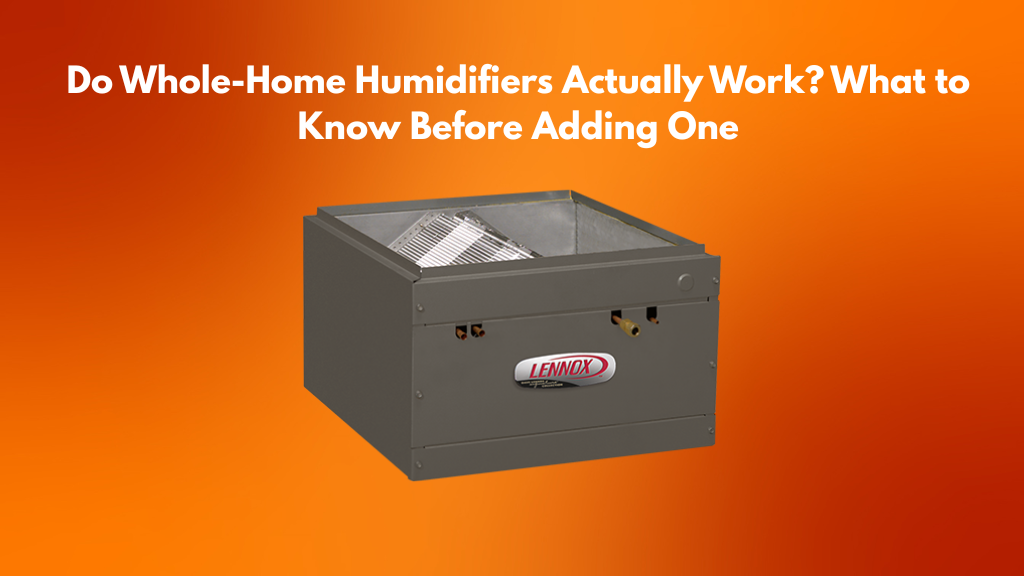
Lennox offers whole-home humidity solutions designed to integrate seamlessly with modern heating systems. Their systems are built to:
- Deliver controlled, even humidity
- Adjust output based on system operation
- Operate efficiently during extended heating seasons
That said, the equipment alone doesn’t determine success.
Installation Is the Most Important Factor
This is where many homeowners go wrong. A whole-home humidifier must be:
- Properly sized for the space
- Matched to the HVAC system
- Installed with correct airflow and drainage
- Calibrated for safe humidity levels
If humidity is too high, it can cause condensation on windows or ductwork. If it’s too low, comfort won’t improve.
Serving residential and full commercial properties across Brooklyn Park and the Twin Cities, Marsh Heating & Air Conditioning takes a system-wide approach—evaluating airflow, heating performance, and indoor conditions before recommending humidity solutions.
Do Whole-Home Humidifiers Help With Energy Efficiency?
Indirectly, yes.
When humidity levels are balanced:
- Spaces feel warmer at lower temperatures
- Furnaces don’t need to run as long
- Temperature swings feel less noticeable
This can reduce strain on your heating system during peak winter months and contribute to more consistent comfort.
Are Whole-Home Humidifiers Worth It for Every Home?
Not always. A professional evaluation is important because humidity issues can sometimes be caused—or worsened—by:
- Poor insulation
- Excessive air leakage
- Ductwork issues
- Ventilation imbalances
In those cases, addressing the underlying problem may be just as important as adding humidity.
The Bottom Line
Whole-home humidifiers absolutely work when they’re:
- Properly selected
- Professionally installed
- Integrated into a well-functioning HVAC system
For many Minnesota homeowners and businesses, they’re one of the most effective ways to improve winter comfort without cranking up the heat.
If dry indoor air has become part of your winter routine, it may be time to look beyond portable solutions and consider a more permanent fix.