
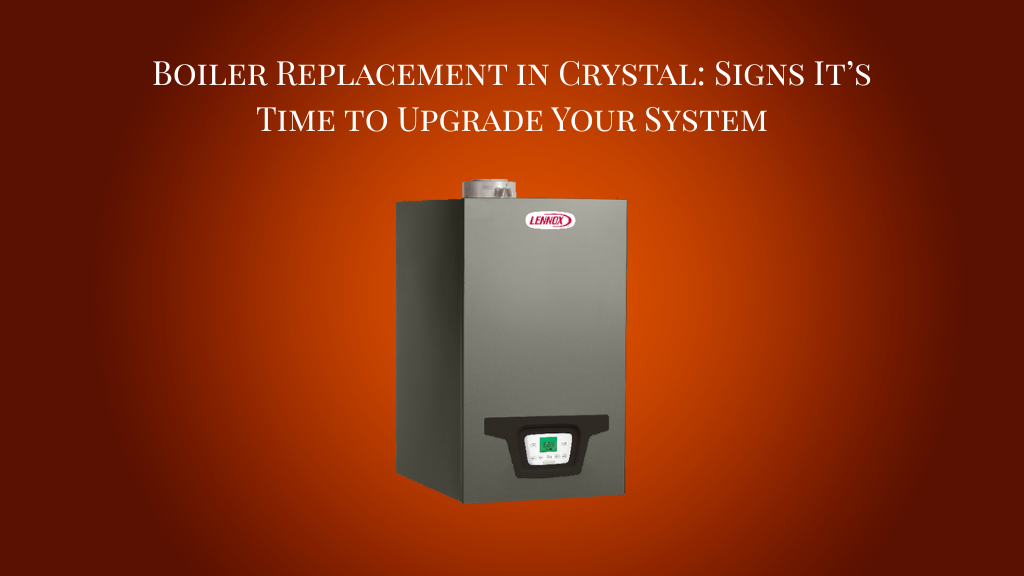
Many homes in Crystal were built when boiler systems were the standard for residential heating. Hydronic heat remains one of the most comfortable and consistent heating methods available — but like any mechanical system, boilers have a lifespan.
At Marsh Heating & Air Conditioning, we’ve serviced and replaced boiler systems in Crystal since 1974. Over decades of experience, we’ve seen a consistent pattern:
Most residential boilers begin to show significant decline after 20–30 years of operation.
Here’s how to know when replacement becomes the smarter decision
Your Boiler Is 25+ Years Old
Boilers often outlast forced-air furnaces, but age still matters.
If your boiler:
- Was installed before 2000
- Has required increasing repairs
- Operates with older efficiency standards
It may be costing more to operate than you realize.
Modern condensing boilers offer significantly higher efficiency ratings and improved control systems compared to older cast iron models.
Rising Heating Bills Without Increased Usage
Older boiler systems:
- Lose combustion efficiency
- Develop scaling inside heat exchangers
- Experience circulator wear
- Struggle with outdated control systems
If your gas bills continue rising in Crystal winters without changes in usage habits, aging equipment may be the cause.
Uneven Heat Between Rooms
Hydronic systems rely on balanced circulation.
Common boiler-related imbalance issues include:
- Air trapped in lines
- Failing circulator pumps
- Zoning valve malfunctions
- Sediment buildup
If certain rooms remain cooler than others, it may indicate declining system performance.
Frequent Service Calls
Occasional maintenance is normal. However, repeated repairs involving:
- Ignition components
- Circulator pumps
- Expansion tanks
- Zone valves
Signal that major components are nearing end-of-life.
After a certain threshold, replacement becomes more predictable and cost-effective than repeated service.
Leaks or Corrosion
Visible corrosion around:
- Fittings
- Pressure relief valves
- Base connections
Can indicate long-term structural wear.
Even minor leaks in hydronic systems should be evaluated quickly to prevent secondary damage.
Modern Boiler Technology Has Improved
Many homeowners are surprised to learn how much boiler technology has evolved.
Modern systems offer:
- High-efficiency condensing operation
- Sealed combustion
- Outdoor reset controls
- Improved zoning capability
- Compact footprint
These upgrades improve:
- Energy efficiency
- Temperature stability
- Equipment longevity
- Operational safety
Proper installation and sizing remain critical.
Repair vs Replace: A Practical Evaluation
At Marsh Heating, we evaluate:
- System age
- Heat exchanger integrity
- Combustion efficiency
- Circulation system condition
- Repair frequency
If repair makes sense, we recommend it.
If replacement offers stronger long-term reliability, we provide a detailed assessment — not pressure.
Can You Convert from Boiler to Furnace?
Some Crystal homeowners ask about converting to forced air.
Conversion may make sense if:
- Central air conditioning is desired
- Major remodeling is planned
- Radiator systems are deteriorating
However, installing ductwork in a hydronic-designed home can significantly increase project cost.
Each home requires an individualized evaluation.
Frequently Asked Questions
How long do boilers last in Minnesota?
With maintenance, 20–30 years is typical. However, efficiency declines over time.
Are modern boilers quieter?
Yes. New systems operate more efficiently and with less mechanical noise.
Is boiler heat more comfortable than forced air?
Many homeowners prefer radiant heat for its consistent and draft-free feel.
Do you service both residential and light commercial boilers?
Yes. We support both residential homes and small commercial properties in Crystal.
Boiler Expertise in Crystal Since 1974
Hydronic heating systems require specialized knowledge.
Marsh Heating & Air Conditioning has installed, maintained, and replaced boiler systems in Crystal since 1974 with a technical, engineered approach.
If your boiler is aging or showing signs of decline, schedule a professional system evaluation at 763.536.0667.
Planning ahead prevents winter emergencies and protects long-term efficiency.