
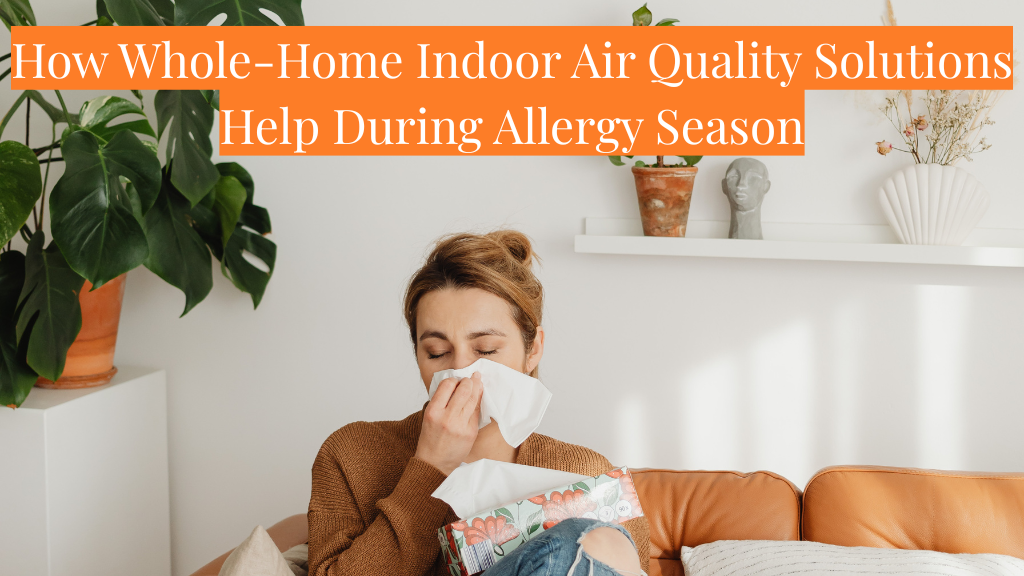
When allergy season hits, many homeowners look for quick fixes—portable air purifiers, frequent dusting, or constantly changing filters. While those steps can help a little, they often don’t address the bigger issue: allergens circulating throughout the entire home or building.
That’s where whole-home indoor air quality (IAQ) solutions make a meaningful difference. Instead of treating symptoms room by room, they improve the air everywhere it flows.
Why Allergies Feel Worse Indoors Than Expected
Many people assume staying indoors protects them from pollen and allergens. In reality, allergens often build up inside.
Indoor allergens commonly come from:
- Pollen brought in on clothing, shoes, and pets
- Dust and fine particles trapped in carpets and furniture
- Air recirculated through HVAC systems
- Limited fresh-air exchange during seasonal transitions
Once inside, these particles can circulate repeatedly unless they’re captured or managed properly.
What “Whole-Home” IAQ Really Means
Whole-home IAQ solutions work with your HVAC system, improving air quality every time the system runs.
Instead of cleaning the air in one space, they:
- Filter air as it moves through the system
- Reduce allergens before they reach living areas
- Improve airflow consistency
- Support balanced humidity and comfort
The result is cleaner air throughout the entire home or building—not just one room.
Filtration That Works All Day, Not Just When You Remember
Portable air cleaners only help when they’re running—and only in limited areas.
Whole-home filtration:
- Operates automatically
- Captures allergens continuously
- Reduces buildup throughout the system
- Helps maintain cleaner air day and night
During allergy season, this constant filtration can significantly reduce airborne irritants.
Airflow Helps Prevent Allergen “Hot Spots”
Allergens often concentrate in areas with poor air movement.
Whole-home IAQ solutions help:
- Keep air circulating evenly
- Reduce stagnant areas
- Support consistent filtration
- Improve comfort room to room
Balanced airflow makes allergy control more effective across the entire space.
Where Lennox Fits Into Allergy-Season IAQ
Many whole-home IAQ solutions are designed to integrate directly with modern HVAC systems. Lennox offers IAQ options that combine filtration, airflow support, and system integration to help reduce allergens throughout the entire home.
These solutions are designed to:
- Improve whole-home air quality
- Work automatically during system operation
- Reduce allergen circulation
- Support comfort during seasonal transitions
Instead of managing air quality manually, the system does the work in the background.
Homes Aren’t the Only Spaces Affected by Allergies
Allergy season also impacts offices, retail spaces, and shared buildings. In commercial environments, allergens can affect:
- Employee comfort and focus
- Customer experience
- Overall indoor cleanliness
Whole-building IAQ strategies help businesses maintain a healthier, more comfortable environment during high-allergen seasons.
Why Professional Guidance Matters
Not every building needs the same IAQ approach. Over-filtering, poor airflow design, or mismatched equipment can actually reduce system performance.
Serving residential and full commercial properties throughout Brooklyn Park and the Twin Cities, Marsh Heating & Air Conditioning evaluates IAQ solutions as part of the complete HVAC system—ensuring allergy relief doesn’t come at the cost of comfort or efficiency.
Allergy Relief Works Best as a System, Not a Patch
The most effective allergy-season strategies usually combine:
- Whole-home filtration
- Proper airflow
- Balanced humidity
- Thoughtful system design
Together, these elements create indoor air that’s cleaner, more comfortable, and easier to live with during allergy season.
The Bottom Line
Allergy season doesn’t have to dominate your indoor environment. Whole-home IAQ solutions help reduce allergens where they circulate most—through the HVAC system—creating cleaner air throughout the entire space.
When air quality is addressed at the system level, allergy relief becomes more consistent and far less effort-dependent.